Sleeper Bus to Bicol
Note: We provide ticketing services as a reseller of Bicol Isarog. This is not the Operator’s Website.
Sleeper Bus to Bicol — Isarog’s 20-Bed Coaches
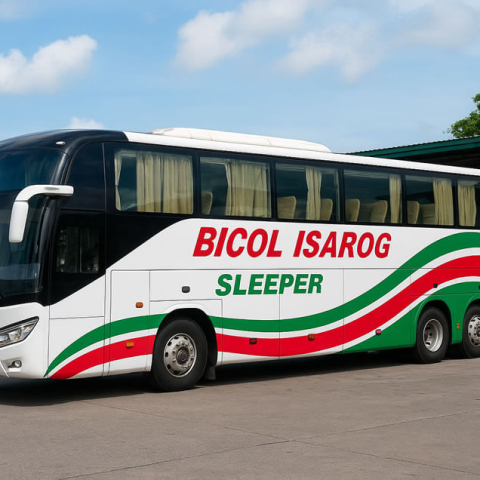
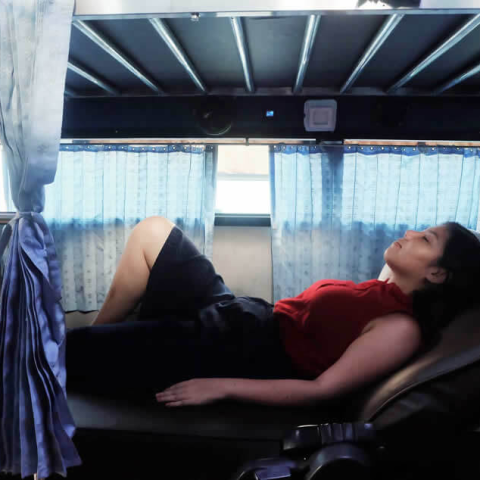
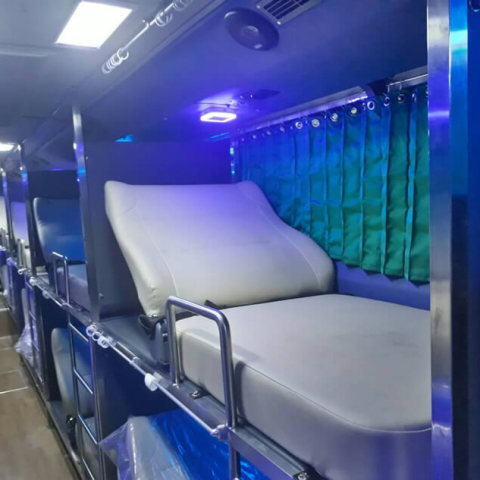
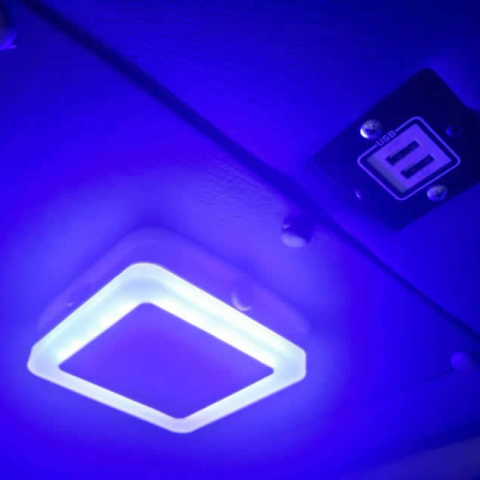
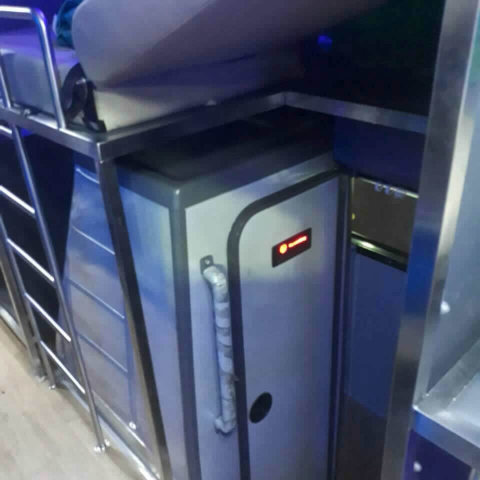
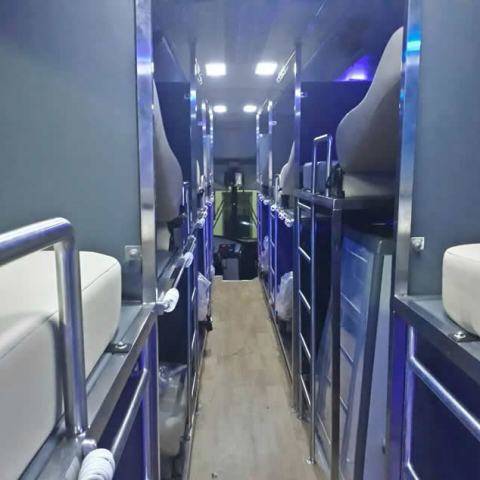
Sleeper Bus to Bicol - Key Features
20 berths (10 double-stacked bunks) sold per coach, typically sold per berth (not per seat).
Privacy curtains at each berth to reduce light and visual disturbance.
Individual reading lights and a small storage shelf per berth.
Shared restroom on board (some sleepers have on-board toilets; verify before booking).
USB / power outlet per berth on newer units, useful for charging devices.
Luggage storage beneath the bus; small valuables kept in a personal locker or under the berth.
Lower noise & dimmed cabin during overnight runs for better sleep.
Sleeper Bus Safety & Maintenance
Bicol Isarog typically follows standard commercial carrier safety protocols:
Regular mechanical checks and scheduled maintenance for long-haul coaches.
Trained drivers and co-drivers working in shifts for overnight runs.
Safety briefing or posted instructions; seatbelts or restraint straps in bunks where required.
Emergency exits and fire suppression equipment on board.
For your safety, keep your seatbelt loosely fastened while lying down if available, and follow crew instructions in case of unexpected stops or incidents.
Bicol Isarog Sleeper Bus Popular Routes
Bicol Isarog deploys sleeper coaches on major trunk routes where overnight travel is common. Typical routes include:
Metro Manila ↔ Naga (Camarines Sur) — the busiest sleeper corridor; overnight trips often depart late evening and arrive early morning. Travel time: ~10 hours
Metro Manila ↔ Legazpi (Albay) — direct overnight sleepers for Albay and surrounding areas. Travel time: ~10 hours
Metro Manila ↔ Sorsogon / Matnog — longer overnight services, some coordinating with ferry schedules. Travel time: ~11 hours
Metro Manila ↔ Samar / Calbayog — longer overnight services. Travel time: ~14 hours
Metro Manila ↔ Leyte / Tacloban — long-distance overnight services. Travel time: ~18 hours
Metro Manila ↔ Masbate City — long-distance overnight services, some coordinating with ferry schedules. Travel time: ~19 hours
Always confirm the exact schedule, the boarding terminal (Cubao, PITX, Alabang, Turbina), and the estimated arrival when booking.
Frequently Asked Questions
Sleeper bus onboard experience — What to Expect?
Pre-departure: boarding opens earlier than seat coaches to process checked baggage and ticket validation. Bring your printed or digital e-ticket and ID.
Cabin environment: lights are dimmed for sleeping; attendants make rounds to assist. Quiet hours are usually enforced.
Bunk comfort: bunks include mattress padding, a pillow, and blankets.
Restroom & stops: Coaches have onboard restrooms; otherwise, scheduled pit stops are used for bathroom breaks and snacks.
Security: staff secure under-chassis luggage; consider keeping valuables on you or in small locked containers.
How to Book a Sleeper Bus to Bicol?
Online Booking (Recommended)
Visit the official Bicol Isarog booking portal or use the trusted PHBUS that lists Isarog services.
Search route & date (e.g., Cubao → Naga; PITX → Legazpi).
Choose “Sleeper” or “Berth” class and select a specific bunk from the seat map (if provided).
Pay securely using a credit/debit card or supported e-wallets; keep the confirmation email/e-ticket.
Walk-In Booking
You can buy a berth at Isarog ticketing counters (Cubao, PITX, Alabang, or Bicol terminals). For popular holiday dates, online booking is advised — berth inventory is limited.
Group Bookings
For groups (10+ berths), contact the operator’s group bookings or corporate desk. They may offer block reservations or charter options for very large groups.
Fares & Booking Rules (What to Know)?
- Sleeper berths are priced higher than reclining seats; fare varies by route, date, and demand.
- Promotional fares occasionally apply to sleeper berths — watch for sales.
- Refunds and rebookings are subject to Isarog’s terms; promo fares often have stricter rules.
- Seat/berth selection is best guaranteed during the online booking process; walk-in purchases are subject to availability.
What to Pack for a Sleeper Bus?
Light sleepwear / comfortable clothes — pajamas or comfortable layers.
Small travel pillow & eye mask — improves sleep on narrow bunks.
Earplugs / noise-canceling earbuds — block engine hum and terminal noise.
Power bank — in case in-berth charging is unavailable or limited.
Toiletries — toothbrush, wet wipes, hand sanitizer, tissue.
Light blanket — if the provided blanket is insufficient or not guaranteed.
Important documents & valuables — keep in a small bag in the bunk with you.
Snacks & water — not all runs provide meals; pit stops are limited overnight.
Pack minimally: under-chassis luggage holds larger items, and retrieving them en route can be time-consuming.
Etiquette & Sleeping Tips?
Respect quiet hours: keep phone volumes low and use headphones.
Curtains up/down: use the privacy curtain politely; avoid shining bright lights into neighboring bunks.
Sanitation: Use wet wipes and hand sanitizer; keep the bunk tidy.
Communicate with crew: if you have medical needs or mobility issues, inform staff at booking or boarding.
Can I choose upper or lower berth?
Yes — most online booking systems let you select an upper (U) or lower (L) berth. Lower bunks are easier to access; upper bunks feel cozier.
Are blankets and pillows provided?
Yes, services include a pillow and blanket, but policies vary. Bring your own for guaranteed comfort.
Is there a toilet on board?
Some sleeper coaches have toilets; others rely on scheduled stops. Confirm at booking.
What if I’m prone to motion sickness?
Lower bunks are generally more stable; consider medication and choose a lower berth.